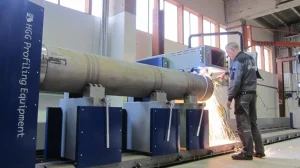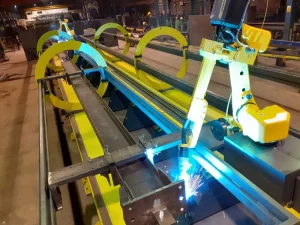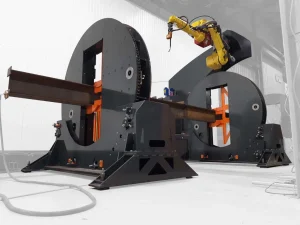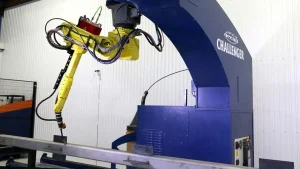
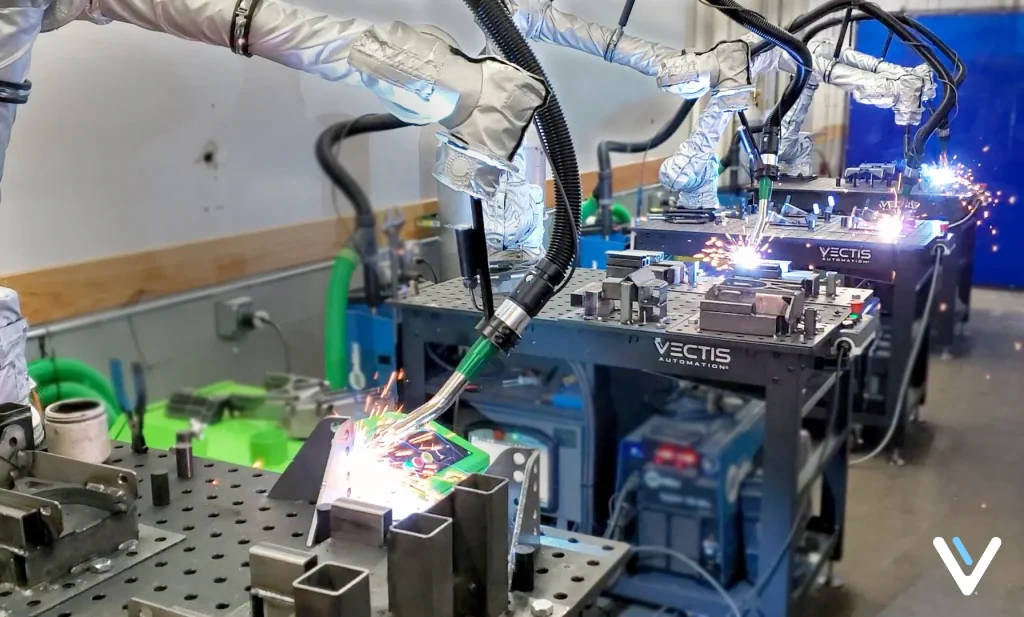
Prepare a robotic welding cell enquiry with part data, weld requirements, throughput targets, operator needs and available floor space.
Robotic Welding Cells: Optimising Arc-On Time and Factory Floor Throughput
Boost Australian factory throughput with robotic welding cells from Impact Machinery. Optimise arc-on time and eliminate manual manufacturing bottlenecks.
Explore our robotic welding solutions. We use the information supplied with your enquiry to confirm whether the requested solution matches our actual scope.
How Do Robotic Welding Cells Eliminate Traditional Workshop Bottlenecks?
As modern automation in steel fabrication accelerates, traditional fabrication environments still rely heavily on workshop operators manually moving heavy parts, cross-checking engineering blueprints, and adjusting physical clamps. These fragmented manual steps keep the welding torch turned off for the majority of a standard work shift, which severely caps overall factory output.
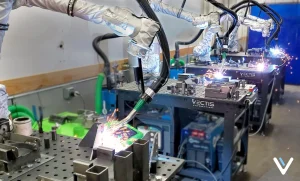
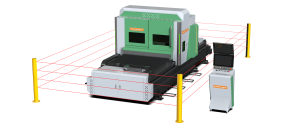
Integrated robotic welding cells eliminate this operational drag by combining the industrial robot, precise work positioners, and safety enclosures into a unified system. By effectively separating the operator loading zone from the active welding zone, the machinery ensures that production never grinds to a halt. This structural balance removes human error and creates highly predictable cycle times for better scheduling.
For useful project context, read how Vectis Automation simplifies robotic welding. It supports this decision without replacing a project-specific assessment.
Maximising Arc-On Time Via Offline Programming (AOLP)
Conventional robot customisation often requires a skilled technician to manually guide the robotic arm to every joint using a physical teach pendant. This traditional programming method takes the equipment offline for hours or even days, completely erasing the productivity gains of automation.
Automated Offline Programming solves this dilemma by allowing engineers to map out collision-free paths entirely within a virtual CAD environment. Because the software handles the trajectory planning digitally, the physical machinery can continue executing its current fabrication run without any operational downtime. This software-driven approach is especially valuable for Australian job shops managing a diverse mix of low-volume products.
How Cell Configuration Affects Workshop Throughput
Achieving high floor throughput requires more than just a fast-welding cycle because post-weld cleanups can easily stall your workshop flow. Implementing low-heat technologies like Cold Metal Transfer ensures a highly stable arc that virtually eliminates weld spatter and thermal distortion. This clean process allows completed components to bypass the grinding bay entirely and move straight to final inspection.
You can also review our industrial machinery range before sending your requirements, drawings, quantities or site information to our team.
- Dual-station configurations allow an operator to safely unload finished items on one side while the robot welds on the other.
- Coordinated multi-axis positioners continuously rotate parts to maintain an optimal down hand position for faster travel speeds.
- Advanced sensing systems monitor the weld pool in real time to catch and correct defects before a batch is finished.
Maximise Your Output With Impact Machinery Robotic Welding Cells
Check out our products to find the perfect automated solution for boosting your workshop efficiency.
Arrange A Robotic Welding Cell Review
Considering automation for a repeatable welding workload? Request a robotic welding review with representative drawings, material types, weld lengths, annual volumes, takt expectations and available floor space. Our team can narrow the machinery options before arranging a detailed discussion or demonstration.