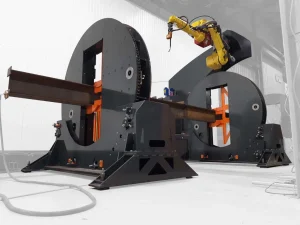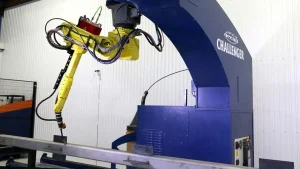
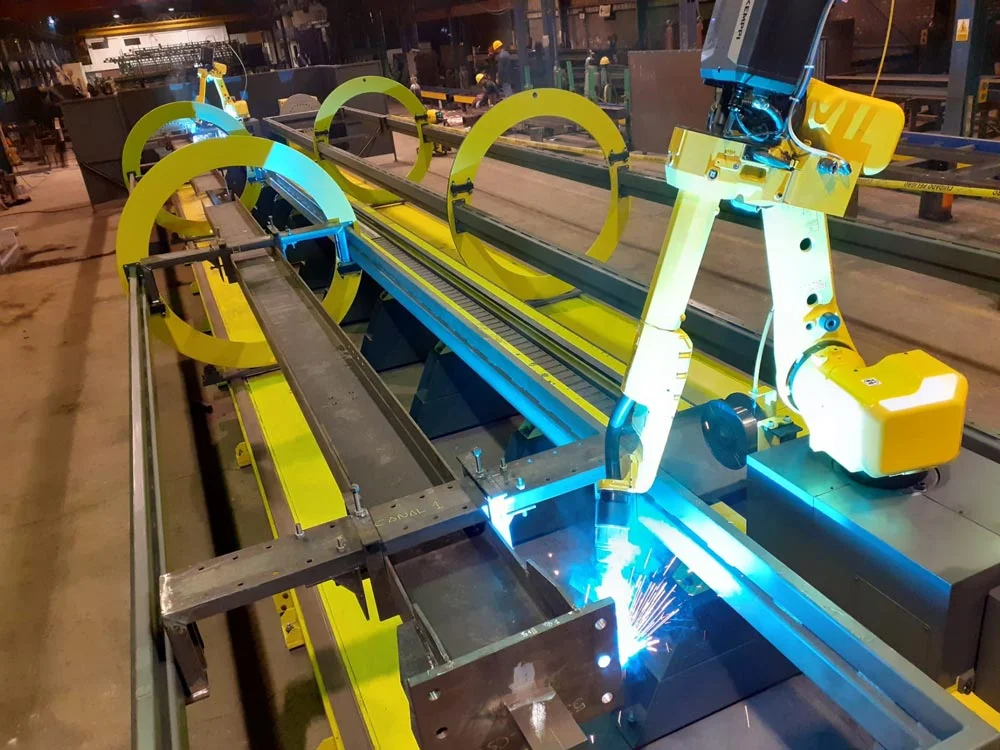
Impact Machinery delivers robotic welding systems in Australia to reduce rework, improve quality, and boost productivity with advanced fit-up technology.
Welding rework remains a costly and often overlooked issue in Australian fabrication, leading to wasted labour, production delays, and material scrap. Many workshops are now turning to robotic welding systems to improve consistency and reduce these inefficiencies at scale. By combining automation with advanced fit-up technology, manufacturers can address the root causes of defects before they impact productivity.
The Real Cost of Rework in Australian Welding Operations
Rework in welding operations is more than a minor inconvenience, as it directly impacts profitability, timelines, and overall efficiency. In many Australian workshops, inconsistent part fit-up, human fatigue, and varying skill levels often lead to defects that require additional labour and resources to fix. This results in higher production costs, disrupted schedules, and reduced throughput.
The financial impact becomes even greater when factoring in wasted consumables, increased energy use, and the opportunity cost of delayed projects. With ongoing skilled labour shortages in Australia, relying heavily on manual processes places further strain on operations. Rework is therefore not just a quality issue, but a broader process control challenge that limits scalability and competitiveness. For many fabricators, investing in automation in steel fabrication is becoming a practical way to improve workflow efficiency and reduce avoidable production setbacks.
How Robotic Welding Systems Reduce Rework at the Source
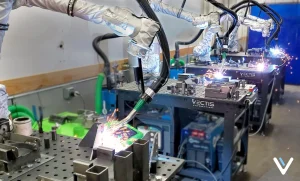
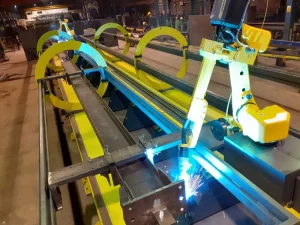
Modern robotic welding systems provide a practical solution by improving repeatability and reducing human variability in weld execution. Unlike manual welding, they follow programmed parameters consistently and can integrate with technologies that address part variation, a common cause of rework. Designed to adapt to real-world fabrication conditions, these systems help minimise errors, reduce costs, and improve overall productivity for Australian fabricators.
These systems reduce defects at the source by delivering:
- Consistent weld quality across every cycle
- Stable arc performance and controlled heat input
- Reduced reliance on operator skill for repetitive tasks
- Improved production predictability and scheduling accuracy
Advanced Fit-Up Technology: The Key to Consistent Weld Quality
While automation improves repeatability, advanced fit-up technology ensures welding accuracy in real fabrication environments where parts rarely align perfectly. Technologies such as touch sensing, seam tracking, and laser vision allow robots to detect and adjust to variations in real time, while proper jigging and fixturing ensure consistent part positioning. Together, these solutions help prevent errors before they occur, reducing rework and improving overall weld quality and production reliability.
Key fit-up technologies include:
- Touch sensing to locate the exact joint position before welding
- Seam tracking to maintain the correct weld path during operation
- 3D laser vision for detecting joint variation and misalignment
- Adaptive control systems that adjust welding parameters dynamically
The Impact Machinery Advantage in Robotic Welding Systems
For Australian manufacturers aiming to improve efficiency and reduce costly rework, Impact Machinery offers reliable automation solutions tailored to local industry needs. Their robotic welding systems deliver consistent performance while remaining accessible for workshops of all sizes, with user-friendly integration and scalable options. By investing in the right technology, fabricators can achieve higher productivity, better weld quality, and more predictable operations.
Check out our products to explore how robotic welding can transform your operations.
Related Blog Articles:
Robotic Welding: Simplified Manufacturing Solutions via Motofil Monoblok Series
Vectis Automation: Revolutionise Your Workflow with Robotic Welding Solutions